.webp)
How to Raise Rent in Delaware Without Breaking the Law (60-Day Notice Rules + Fair Housing Tips)

Updated: Sep 10
Raising rent is one of those landlord tasks that feels simple on paper but can turn into a legal headache if you skip a step or miss a deadline. Delaware has specific rules about how and when you can increase rent: and getting it wrong can lead to disputes, legal complications, or even fair housing violations.
The good news? Once you know the rules, the process is straightforward. Let's break down exactly what Delaware landlords need to know about rent increases, including the critical 60-day notice requirement, fair housing protections, and how to handle the process professionally.
The 60-Day Written Notice Rule: Non-Negotiable
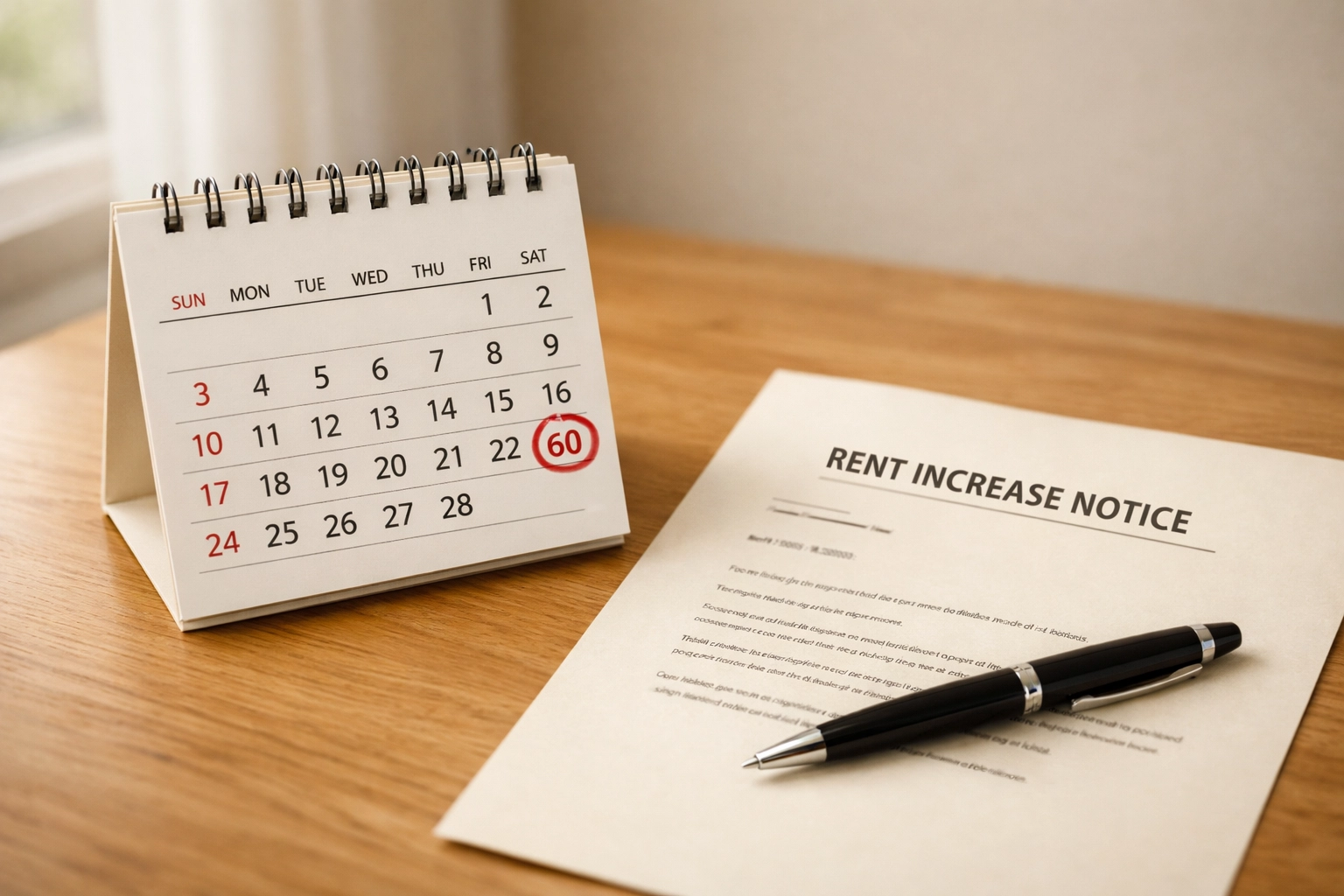
In Delaware, if you want to raise rent on a residential property, you must provide at least 60 days' written notice before the current lease term expires. This isn't a suggestion: it's the law.
Here's what that means in practice:
The notice must be in writing (no verbal agreements or casual text messages).
The 60-day clock starts when the tenant receives the notice, not when you send it.
The notice must arrive before the lease expires, giving the tenant enough time to decide whether to accept the new rate or move out.
Example: If your tenant's lease ends on August 31st, you need to deliver written notice of the rent increase no later than July 1st. Anything after that, and you're out of compliance.
For mobile home parks, the timeline is even longer: landlords must provide between 90 and 120 days' notice, and increases are limited to once per 12-month period.
You Can't Raise Rent During a Fixed-Term Lease
This is a big one that trips up a lot of landlords: you cannot raise rent in the middle of a fixed-term lease unless the lease agreement explicitly allows it.
If your tenant signed a one-year lease at $1,200/month, that rate is locked in for the full 12 months. Even if the market shifts or your costs go up, you have to wait until the lease term ends to increase rent.
The only exception? If your lease includes a clause that permits mid-lease increases (for example, a graduated rent schedule or an inflation adjustment). Even then, those terms need to be clearly spelled out in the original lease agreement: you can't add them later.
Bottom line: If you want flexibility to raise rent during the lease term, build that language into the lease from day one. Otherwise, plan your increases around lease renewals.
The 45-Day Tenant Response Window
Once you've delivered your 60-day notice, Delaware law gives tenants at least 45 days before the lease expiration to respond or object to the increase.
This means your 60-day notice needs to arrive early enough that tenants still have 45 days to consider their options. If your timing is off, the increase may not be enforceable.
Here's how the timeline works:
Day 1: You deliver written notice of the rent increase.
Day 15 (latest): Tenant receives notice with 45 days remaining before lease expiration.
Day 15–45: Tenant evaluates the increase, decides whether to renew, negotiate, or move out.
Day 60: Lease expires, and the new rent takes effect (if the tenant stays).
If the tenant doesn't respond within the 45-day window, the increase is generally considered accepted. But clear communication is always better than assumptions: which is why professional property managers handle this process with documentation and follow-up.
What You Can't Do: Retaliation and Discrimination
Delaware doesn't have statewide rent control, which means there's no cap on how much you can increase rent. But that doesn't mean you can raise rent for any reason.
Retaliation Is Illegal
You cannot raise rent as punishment for a tenant who:
Files a maintenance request or complaint
Reports code violations to local authorities
Joins or organizes a tenant association
Exercises any legal right as a tenant
If you increase rent shortly after a tenant takes one of these actions, it can be interpreted as retaliation: even if you had legitimate reasons for the increase. Courts take retaliation claims seriously, and landlords who lose these cases can face penalties, damages, and legal fees.
Pro tip: If you need to raise rent and the tenant has recently filed a complaint, document your reasoning (market conditions, property improvements, etc.) and consider delaying the increase slightly to avoid the appearance of retaliation.
Discrimination Violates Fair Housing Laws
Under the federal Fair Housing Act and Delaware law, you cannot increase rent based on:
Race, color, religion, or national origin
Sex, familial status, or disability
Source of income (Delaware extends protection here: you can't raise rent because someone uses Section 8 or another voucher program)
Occupation
If you raise rent for one tenant but not another, and the difference can be tied to a protected class, you're opening yourself up to a discrimination lawsuit.

How Much Can You Increase Rent in Delaware?
Here's the part that surprises a lot of landlords: Delaware has no statewide limit on rent increases for standard residential properties.
You can raise rent by $50, $200, or even double it: as long as you follow the notice requirements and aren't violating fair housing or retaliation rules.
That said, just because you can doesn't mean you should. Large, sudden increases can:
Drive good tenants to move out (costing you turnover expenses)
Create friction and potential legal disputes
Hurt your reputation in the local rental market
Best practice: Research comparable rents in your area and keep increases reasonable and market-aligned. A 3–7% annual increase is typical and easier to justify if questioned.
Mobile Homes: A Special Case
If you own or manage a mobile home park, rent increases are more restricted:
You can only raise rent once every 12 months.
Increases that exceed the average inflation rate must be justified through the Delaware Manufactured Home Relocation Authority (DEMHRA).
You must provide 90–120 days' notice.
How Advanced Realty Solutions Handles Rent Increases
At Advanced Realty Solutions, we manage the rent increase process so landlords stay compliant and tenants feel respected.
Here's how we do it:
Market analysis: We review comparable properties to recommend fair, defensible increases.
Proper documentation: Every notice is delivered in writing, on time, with a clear paper trail.
Tenant communication: We explain the increase professionally, answer questions, and handle negotiations if needed.
Compliance checks: We ensure the timing, language, and process meet Delaware legal requirements: no retaliation risk, no fair housing violations.
Follow-up: We track tenant responses and coordinate lease renewals or move-outs seamlessly.
The result? Rent increases that stick, fewer disputes, and better tenant retention.

Best Practices for Raising Rent in Delaware
To summarize, here's your checklist for a legal, professional rent increase:
✅ Provide 60 days' written notice before the lease expires (90–120 days for mobile homes). ✅ Wait until the lease term ends: no mid-lease increases unless the lease allows it. ✅ Give tenants 45 days to respond before the lease expiration date. ✅ Avoid retaliation: don't raise rent right after a complaint or maintenance request. ✅ Follow fair housing laws: no discrimination based on protected classes or source of income. ✅ Keep increases reasonable: align with market rates to reduce turnover. ✅ Document everything: written notices, delivery dates, and tenant responses.
Final Thoughts
Raising rent doesn't have to be stressful or legally risky. By following Delaware's 60-day notice rule, respecting tenant rights, and communicating professionally, you can adjust rent to match market conditions without burning bridges or breaking the law.
If you're managing multiple properties or just want the peace of mind that comes with professional handling, that's where Advanced Realty Solutions comes in. We handle the details so you don't have to.
Questions about raising rent on your Delaware property? Reach out to our team( we're here to help.)
Comments